By Drive With Confidence Driving School | July 2025
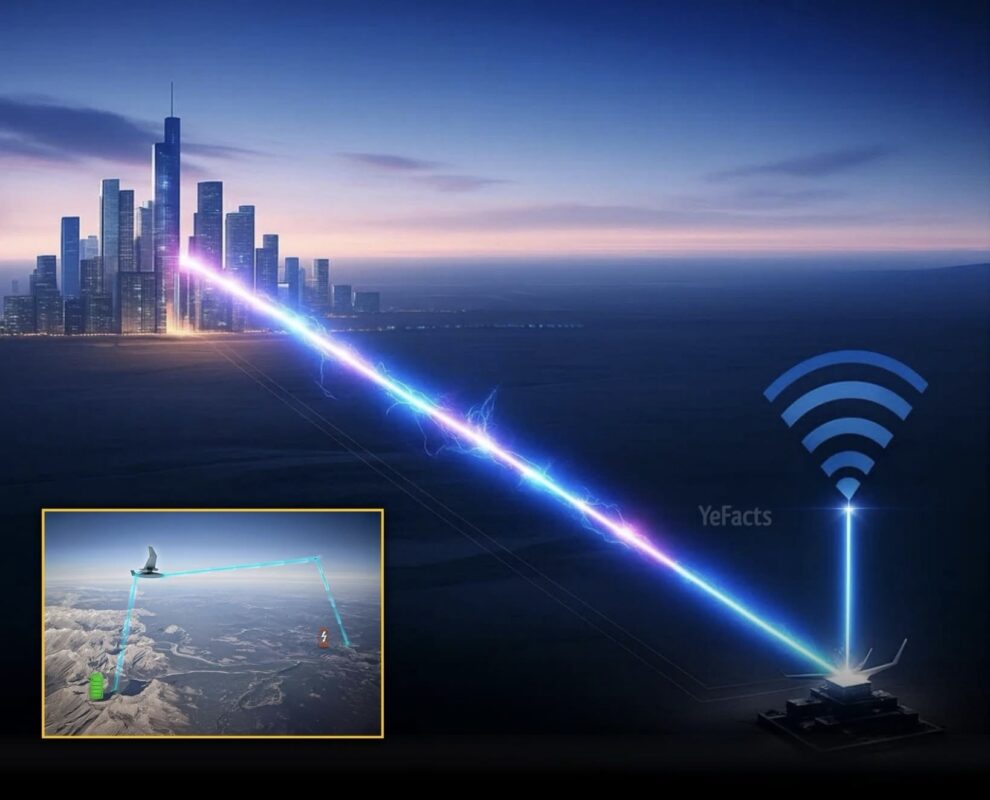
In June 2025, a moment of scientific brilliance unfolded in the deserts of New Mexico, USA — and its ripple effects may soon be felt on highways in India and across the world. For the first time in history, electric power was transmitted over 8.6 kilometers (5.3 miles) using a laser beam, without any wires, poles, or grids.
This wasn’t a science fiction movie. It was a real experiment, conducted by the Defense Advanced Research Projects Agency (DARPA), an elite U.S. research institution known for inventing groundbreaking technologies like the internet and GPS.
At Drive With Confidence Driving School, we’re not just preparing students to drive—we’re preparing them to understand how the world of mobility is changing. And this change is monumental.
🚀 What Exactly Happened?
DARPA’s project, called POWER (Persistent Optical Wireless Energy Relay), used a high-powered infrared laser to send 800 watts of energy through open air to a specialized receiver.
The receiver converted the laser beam back into usable electrical energy. The system safely transmitted over 1 megajoule of energy in just 30 seconds. The test smashed previous records and proved that long-range wireless power transmission is no longer theoretical — it’s real.
This innovation is not just about military use. It could completely reshape how we power vehicles, cities, and infrastructure in the coming decades.
🔋 What Is Wireless Power Transmission?
Wireless power transmission (WPT) allows electricity to be sent from one place to another without wires. Instead of metal cables, it uses:
Microwaves Lasers Magnetic fields Radio waves
The idea isn’t new. In fact, Nikola Tesla imagined it in the early 1900s. But today, thanks to DARPA’s achievement, we now have a working demonstration — and the technology is catching up with the vision.
🛣️ How Could This Revolutionize Driving?
This breakthrough could bring some stunning transformations to how we drive and use energy:
1. EVs That Charge on the Move
One of the biggest barriers to electric vehicle (EV) adoption is range anxiety — the fear that the battery will run out before the next charging station.
With wireless power:
Roads could be built with embedded receivers to charge EVs as they drive. Cars could “catch” energy from wireless power zones — like mobile charging hotspots. No more cables, no more waiting at charging points.
This means a future where your car charges while driving, much like your mobile phone gets Wi-Fi.
2. Smart Infrastructure in Indian Cities
Imagine:
Traffic lights, CCTV cameras, and emergency lights powered without wiring. Flood-prone zones getting power without underground cables. Disaster-hit areas receiving emergency electricity within minutes.
Cities like Mumbai, Surat, or Bengaluru could integrate smart energy grids faster and more safely.
3. Power for Rural and Remote Areas
In India, many villages and remote highways still suffer from poor electricity access. Setting up grid infrastructure in hilly or forested areas is expensive and time-consuming.
Wireless power could:
Reach areas where electric poles can’t be built. Enable remote EV charging, even where no physical grid exists. Empower schools, hospitals, and mobility services with non-invasive, clean electricity.
⚙️ Are There Challenges?
Yes, of course. Every big breakthrough faces real-world obstacles:
Safety: Powerful lasers must be operated with care, especially near people. Efficiency: Current transmission losses must be reduced to match wired systems. Cost: Laser-based systems are expensive now — but costs will fall with scaling. Atmospheric Interference: Rain, fog, and pollution can reduce laser performance.
Still, none of these are impossible to solve. The first airplane was unsafe and short-ranged too. Innovation always improves with time and testing.
🌍 Why This Matters for India
India is undergoing a rapid transformation:
National EV policy goals to shift to electric transport Massive urban expansion and smart city projects Remote terrain from Ladakh to the Andaman Islands that needs clean energy
Wireless power could help India:
✅ Accelerate EV infrastructure without huge land use
✅ Make public transport cleaner and more connected
✅ Bridge the rural-urban power divide faster
✅ Achieve sustainability goals with fewer carbon emissions
This is not just about convenience — it’s about building an energy-resilient nation.
💡 What Should New Drivers Understand?
Whether you’re a beginner or a daily driver, here’s why this technology is relevant:
You might soon drive a car that doesn’t need to be plugged in. Your vehicle could receive live power updates, like a mobile phone downloading data. You’ll need to understand how energy zones, charging alerts, and battery health work in a wireless system. Driving psychology will shift from fuel fear to flow confidence — just like how internet access changed how we communicate.
At Drive With Confidence Driving School, we believe in teaching not just driving — but awareness. Your driving journey is going to intersect with some of the most exciting technologies of the 21st century.
✨ In Conclusion: The Road Ahead Is Invisible — But It’s Powered
DARPA’s 2025 laser power experiment marks more than a technical achievement — it’s a cultural milestone. We’re stepping into a future where roads, cars, and energy are all connected wirelessly.
We’re not there yet — but we’re closer than ever.
So as you learn to drive, remember:
You’re not just learning to handle a vehicle.
You’re preparing to navigate a future where energy flows through the air, and where confidence comes not from fuel — but from knowledge.